Chesapeake Bay Water Temperature — Live Readings and Monthly Averages
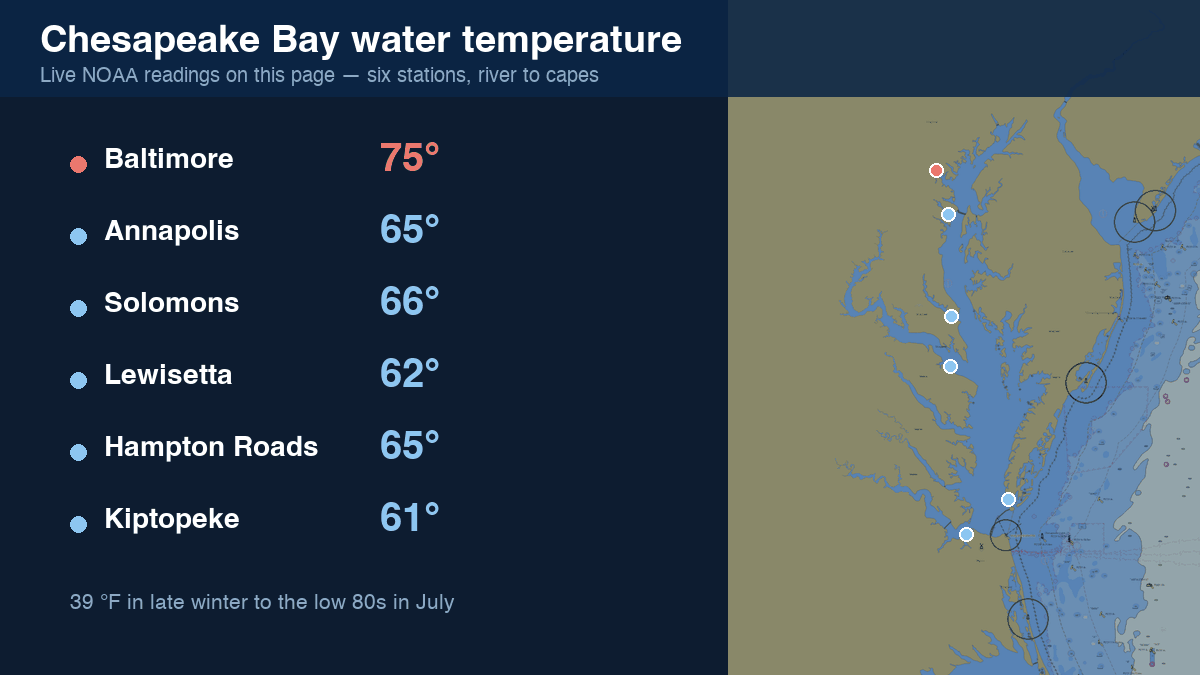
Right now, measured by NOAA:
Loading live readings…
Typical temperatures by month
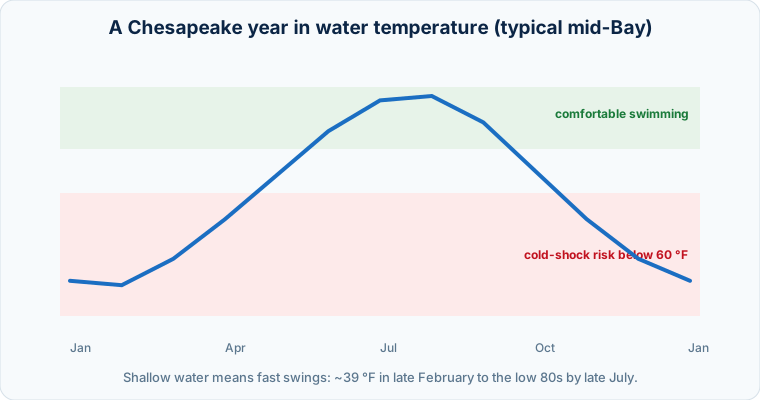
The Bay swings through a huge annual range for coastal water — roughly 36–40 °F in late winter to the low-to-mid 80s at the height of summer — because it is shallow (about 21 ft on average) and warms and cools quickly. Mid-Bay rules of thumb:
- March: low-to-mid 40s — cold-water-shock territory; wear flotation
- May: low-to-mid 60s — wetsuit swimming, fine for boating
- July–August: upper 70s to mid 80s — peak swimming (and peak sea-nettle jellyfish)
- October: upper 50s to upper 60s and falling fast — the classic cold-water accident season
- December: 40s — upper-Bay creeks can skim with ice in hard winters
The upper Bay (shallower, fresher) runs a few degrees warmer in summer and colder in winter than the ocean-moderated lower Bay. Shallow rivers and coves warm earliest in spring.
Why it matters on a boat
- Below about 60 °F, sudden immersion causes gasping and rapid loss of swimming ability — most Chesapeake fatalities are spring and fall cold-water events
- Engine raw-water cooling and winterization timing follow water temperature, not air
- Stripers, blues and specks all move by water temperature — anglers watch these readings as closely as sailors watch wind
Any station on the live chart with a thermometer reading shows the same NOAA data — tap a station marker near your water.
Keep learning
- How Deep Is the Chesapeake Bay? Average 21 ft, 174 ft at Its Deepest
- How Long Is the Chesapeake Bay? Size, Width and Crossing Times
- Is the Chesapeake Bay Salt Water? The Salinity Gradient, Explained
- Are There Sharks in the Chesapeake Bay? What Actually Swims Here
- Winterizing Your Boat on the Chesapeake
- Plan Next Season's Chesapeake Cruise
- How to Read a Nautical Chart
- When Is High Tide? Chesapeake Bay Tides and Currents, Explained
- Depth, Draft and Safety Margins on the Bay
- Planning a Chesapeake Bay Cruise