Are There Sharks in the Chesapeake Bay? What Actually Swims Here
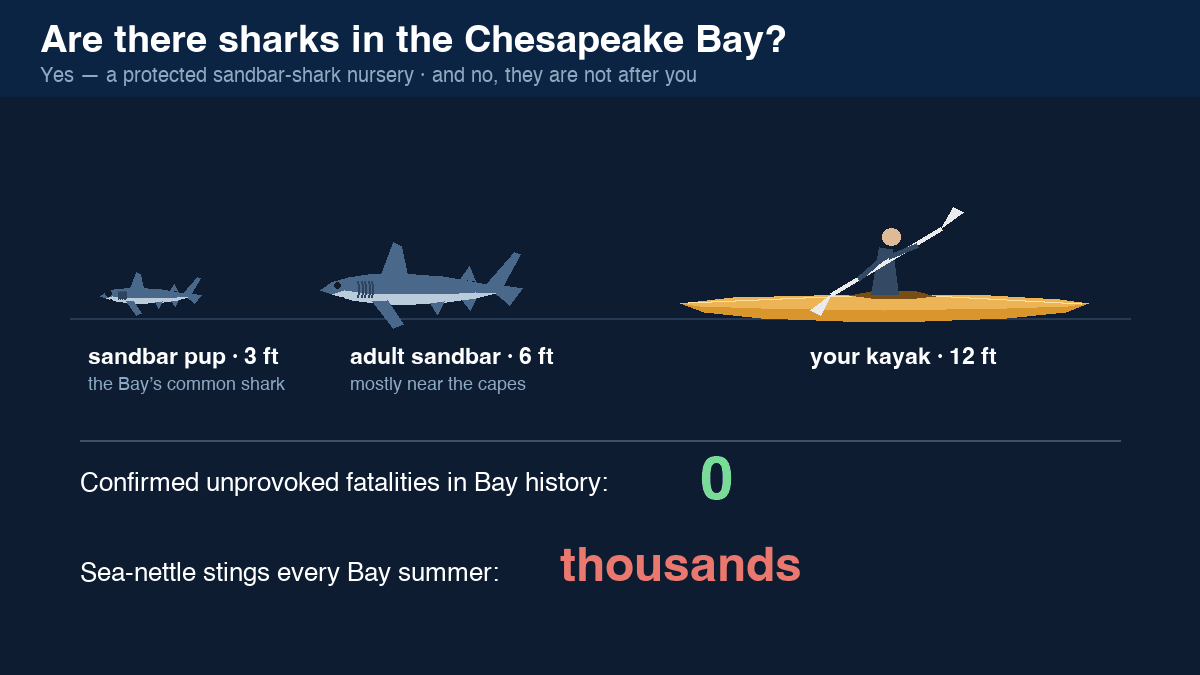
Yes — but almost entirely small, shy ones, and almost entirely in the saltier lower Bay. The lower Chesapeake is one of the most important sandbar shark nurseries on the U.S. East Coast: females drop their pups in the Bay’s mouth each summer, and the young — mostly 2–4 feet long — cruise the lower Bay’s shallows eating crabs and small fish until fall.
Who else visits
- Smooth dogfish — a small, harmless bottom shark, common summer visitor
- Bull sharks — rare but real: the one species comfortable in brackish water, occasionally recorded as far up as the middle Bay in late summer
- Sand tigers, blacktips, spinners — occasional visitors near the capes
- Cownose rays — not sharks, but their fins break the surface in squadrons every summer and cause most “shark!” reports on the Bay
Should swimmers worry?
Essentially no. There is no confirmed unprovoked shark fatality in Chesapeake Bay history, and attacks of any kind are vanishingly rare — the Bay’s murky, brackish water holds little that interests a large shark. The middle and upper Bay, where most people swim, are too fresh for nearly all species (see the salinity gradient). The Bay’s actual summer swimming hazard is the sea nettle jellyfish, which stings thousands of people a year.
Boaters and anglers in the lower Bay: a hooked “big skate” that pulls like a truck may well be a young sandbar shark — they’re protected in the nursery, so release them quickly. Check water temperatures — shark season tracks the warm months, June through September.
Keep learning
- How Deep Is the Chesapeake Bay? Average 21 ft, 174 ft at Its Deepest
- Chesapeake Bay Water Temperature — Live Readings and Monthly Averages
- How Long Is the Chesapeake Bay? Size, Width and Crossing Times
- Is the Chesapeake Bay Salt Water? The Salinity Gradient, Explained
- Winterizing Your Boat on the Chesapeake
- Plan Next Season's Chesapeake Cruise
- How to Read a Nautical Chart
- When Is High Tide? Chesapeake Bay Tides and Currents, Explained
- Depth, Draft and Safety Margins on the Bay
- Planning a Chesapeake Bay Cruise